
The way the federal government procures construction is undergoing a meaningful transformation.
Having spent the majority of my career in and around federal work, I believe the shift – from a default model of design-bid-build to more design-build procurement – is the most significant and positive shift in decades. The impact will be felt by taxpayers, government agencies, and a new generation of builders willing to bring fresh thinking to the built environment.
I started my career in engineering and then moved into my construction-focused role in Washington, D.C., in 2001. For decades, I served clients working on both the owner’s representative and construction sides of complex, secure federal facilities.
I have spent more than 22 years across nearly every phase of federal contracting, and I have seen how the procurement system can support strong project outcomes – and the consequences when there is misalignment. With that perspective, I believe these changes have the potential to reshape how federal projects are delivered, who gets to participate, and how effectively public dollars are put to work.
The Limitations of the Traditional Model
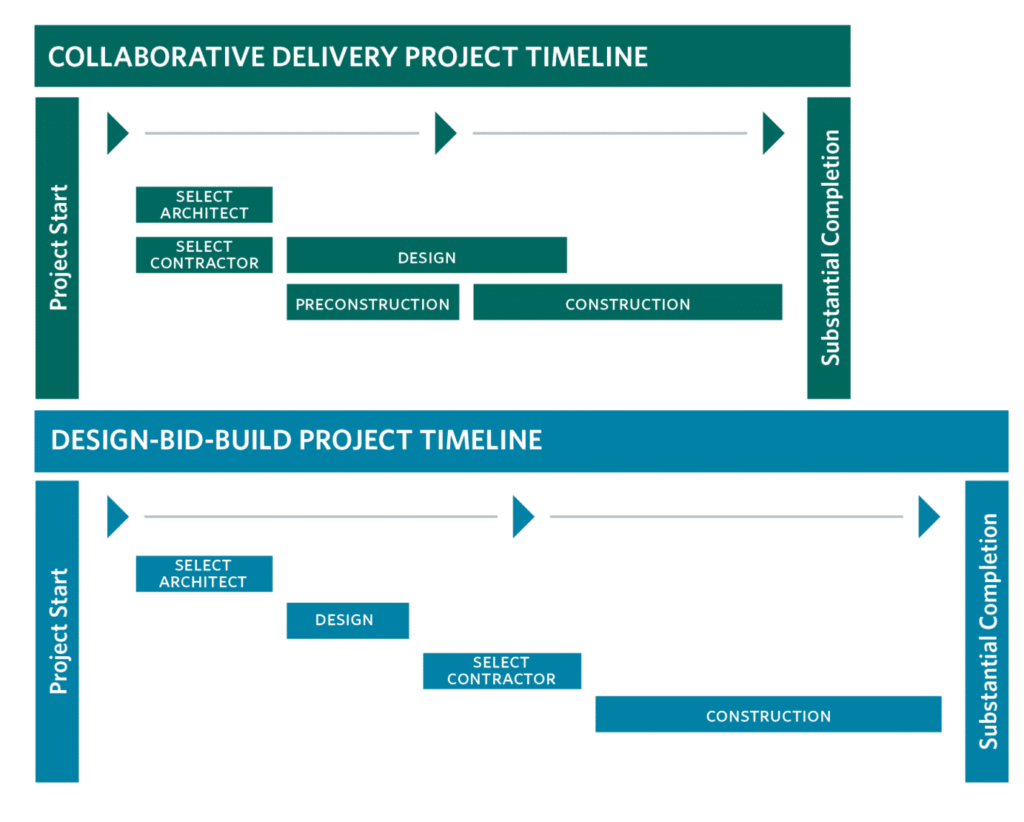
The long-standing default in federal construction has been design-bid-build, in which the owner (the government) contracts separately with a designer and then with a contractor. The model maximizes owner control, but it comes with significant structural drawbacks.
Under this approach, the contractor enters the project after design documents are fully completed, with no opportunity to provide constructability input, identify feasibility concerns, or meaningfully influence outcomes. The result is a process prone to RFIs, change orders, and adversarial dynamics. The costs — in time, money, and accountability — are ultimately borne by the taxpayer.
Why Design-Build Matters, and Why It’s Happening Now
Recent amendments to the Federal Acquisition Regulation have given agencies expanded authority to pursue design-build delivery.
Rather than issuing prescriptive design requirements to contractors, agencies can now define project outcomes and performance standards, then allow integrated design-build teams to determine how best to achieve them.
This approach moves critical decisions earlier in the project lifecycle (“to the left”), when integrated team collaboration has the greatest influence on cost, quality, and schedule. It eliminates the need for separate design and construction procurements, reducing schedule and administrative burden while avoiding separate funding appropriations for the design and construction phase.
The change reflects broader realities. Federal construction budgets have grown while agency staffing has been reduced. Agencies increasingly need build partners who can take ownership, not contractors waiting for direction.
Design-build is well suited to that environment. It accelerates delivery, reduces administrative burden, produces fewer disputes, and creates clearer accountability across the project team. In many respects, this shift echoes the integrated master builder model that was once common in construction.
A Model that Rewards Collaboration and Innovation
This procurement shift represents a win for all stakeholders. Taxpayers benefit from faster project delivery, reduced waste, and fewer cost overruns. Government agencies are freed from serving as intermediaries between designers and builders. And the competitive landscape opens to a new class of builders that distinguish themselves on collaboration, expertise, and delivery.
Early engagement and a collaborative team also opens the door for innovation. When partners can share insights and plan together, we can introduce solutions that might not be considered in design-bid-build projects that compartmentalize roles. With design-build, we create an environment in which cultivates new ideas that save time and money or improve outcomes.
At McGough, the design-build model dovetails with how we approach our work. We have a relentless focus on creating value for our design and trade partners. We prefer to collaborate early and continuously, and we deliberately avoid adversarial dynamics. We want influence over project outcomes, and we pursue success through transparency, engagement, and partnership.
That collaborative ethic, combined with McGough’s technical expertise and commitment to integrity, is precisely what design-build federal work demands.
Opening a New Chapter for Construction Contractors
Those same qualities were central to my decision to join McGough. After more than two decades observing organizations of every size and structure, I came to understand that culture is the defining variable. McGough’s emphasis on partnership, its collaborative orientation, and its values aligned with what I had come to regard as the foundation of excellent federal delivery. That alignment is why I chose to be here.
This evolution in the federal marketplace presents a significant opportunity for McGough to leverage its core strengths. While we have a proven ability to deliver projects under a variety of procurement methods, the increasing adoption of design-build within the federal sector aligns particularly well with our collaborative culture, integrated delivery approach, and commitment to innovation. As a result, a growing number of federal opportunities are becoming an ideal fit for how we deliver value to our clients.
The shift now underway in federal procurement rewards the right behaviors and creates space for contractors who are genuinely committed to delivering results. McGough is well positioned for this moment, and we look forward to helping shape the future of federal construction.